
In the utility industry, efficient field service management is crucial for keeping the power on and the water flowing. Utility companies face unique challenges in managing field operations – from dispatching crews to remote sites, to tracking work orders and equipment across vast service areas. Leading enterprise solutions recognize the importance of streamlining these processes. These industry perspectives underscore a simple truth: optimizing service management and field operations is key to improving reliability, cutting costs, and delighting customers. In this blog, we’ll explore common pain points utilities face in field service and how adopting best practices (like integrated dispatch or mobile field apps) can dramatically improve operations. We’ll also show how Olix365 – a cloud-based Utility ERP – addresses these challenges with a comprehensive solution tailored for utility providers. Let’s dive into how utilities can boost efficiency, enhance service delivery, and stay ahead with smarter field service management.
Challenges in Utility Field Operations
Managing field operations in a utility company isn’t easy. There are many moving parts and potential bottlenecks:
- Complex Scheduling & Dispatch: Coordinating field technicians for installations, repairs, and emergency outages is complicated. Manual scheduling (via spreadsheets or calls) often leads to double-bookings or missed appointments. Inefficient dispatch means the right technician might not be assigned to the right job at the right time, causing delays.
- Communication Gaps: Field crews and office teams must stay in sync. Without real-time communication, technicians may lack up-to-date job details or encounter surprises on-site. Likewise, dispatchers might not know a crew’s status or location, leading to disorganized routing and idle time.
- Long Travel Times: Utilities often serve wide territories. Poor route planning can have crews driving back and forth needlessly. This not only wastes fuel and time but also increases wear on vehicles and limits the number of jobs done per day.
- Inventory & Equipment Hurdles: Technicians arriving on-site without the proper parts or tools is a common issue. When service trucks aren’t stocked due to lack of inventory visibility, first-time fix rates suffer – meaning multiple visits for one issue. This frustrates customers and racks up costs.
- Data Silos & Manual Processes: Many utilities still use legacy systems or isolated tools for work orders, customer calls, inventory, etc. Key information might be scattered across spreadsheets, paper forms, and separate databases. Such silos make it hard to get a full picture of operations. They also force staff to enter data multiple times, increasing errors and slowing down updates.
- Customer Service Pressure: Today’s customers expect timely service and clear communication. When there are outages or service requests, customers want accurate ETAs and updates. If field operations are disorganized, call centers get swamped and customer satisfaction plummets.
These pain points can snowball – an unavailable part or a scheduling mix-up can cascade into longer outages or unhappy customers. To overcome these challenges, utilities need to modernize how they manage service tasks and field crews. The good news is that there are proven strategies and tools to address each of these issues. Next, we’ll look at key optimization strategies that leading solutions use, and how applying them can transform utility field operations.
Key Strategies to Optimize Field Service Management
Utilities can greatly improve their field service performance by embracing a few core strategies and technologies. Here are the most impactful approaches to optimize service management and field operations:
1. Integrated Scheduling and Dispatch
One of the foundations of efficient field service is an integrated scheduling and dispatch system. Rather than juggling separate calendars, spreadsheets, and phone calls, utilities benefit from a unified platform that ties together all scheduling and work order data. This means when a customer calls in with a service request, the dispatcher can see all technicians’ availability, skills, and locations in one place and assign the job optimally. Leading ERPs stress this integration – for instance, Acumatica notes that you can enhance efficiency by seamlessly integrating scheduling, dispatching, and call center operations into a single system . With an integrated schedule board, dispatchers avoid conflicts like double-booking and can ensure every job is allocated to the best-fit crew. This reduces waiting times and prevents missed or delayed appointments.
2. Empowering a Mobile Workforce
Field technicians are the heroes on the ground. Empowering them with the right mobile tools can dramatically improve service outcomes. In practice, this means equipping crews with mobile apps or devices that provide job details, guidance, and real-time updates – even offline in remote areas. Top field service solutions emphasize mobile workforce support. IFS, for example, offers mobile field service functionality as a key component of its FSM suite, enabling companies to manage mobile employees’ schedules with real-time visibility and optimized planning of resources .
Mobile access speeds up issue resolution. Technicians can receive new work orders on their tablet or smartphone instantly while in the field – no need to drive back to the office for assignments. (IFS’s field service app allows work orders to be dispatched straight to techs’ tablets in real time , illustrating how instant that communication can be.) They can also update job status on the go – marking tasks complete or noting issues – which loops back to dispatch and other teams immediately. This two-way communication between field and office keeps everyone aligned. Additionally, a mobile solution often enables capturing data on site (photos of equipment, customer signatures, etc.) and even working offline. For utilities, offline capability is crucial because crews often work in signal-dead zones (think rural areas or underground).
3. Real-Time Tracking and Smart Routing
Inefficient travel and poor visibility into field activities can drain a utility’s resources. That’s why real-time tracking and route optimization are game-changers for field operations. Modern field service management software includes GPS-based tracking of technicians and intelligent route planning. Dispatchers can monitor where each crew is in real time on a map, allowing for better coordination and quick re-routing when new high-priority jobs come in (such as an emergency outage). Smart routing algorithms can automatically suggest the optimal sequence of stops for a technician’s day, minimizing back-and-forth driving. This significantly cuts down travel time, fuel costs, and vehicle wear. According to NetSuite, optimizing technician scheduling and routing can reduce unnecessary travel time and fuel expenses, and real-time tracking helps allocate resources efficiently while minimizing costly delays .
Real-time tracking isn’t just for internal benefits; it also improves customer communication. With live status information, your call center or automated system can provide accurate updates (“Technician en route, 15 minutes away”).
4. Unified Communication and Information Flow
Breaking down the wall between field crews and the office is essential. An optimized service management setup ensures that everyone is on the same page, whether they’re in the control room or out in the field. This requires unifying communication channels and centralizing information. When a dispatcher assigns a job through the system, the field team’s mobile device should ping with all relevant details. Conversely, when a technician updates the job status or encounters an issue, that information should flow back instantly to headquarters. Integrating a contact center or customer service module with field service is also beneficial. For example, if a customer calls for an update, any agent can instantly see the status of the work order (perhaps “crew dispatched” or “awaiting spare part”) without chasing down the technician by phone.
Leading field service platforms facilitate this kind of integration. In fact, IFS’s utility field service solution is noted for unifying field and office operations on a single platform to manage utility crews and all types of field work . When field staff, schedulers, call center reps, and even contractors are collaborating through one system, nothing falls through the cracks. This unified approach eliminates redundant phone calls and paperwork. It also means data only needs to be entered once – when a work order is created or updated – and everyone sees the same updated record. The result is a single source of truth for service operations.
5. Proactive Maintenance and Inventory Management
Another strategy to optimize field operations is shifting from reactive firefighting to proactive management. This involves two key elements: preventive maintenance and effective inventory control. Preventive maintenance means scheduling routine inspections and upkeep for critical infrastructure (like transformers, pipelines, etc.) before they fail. By leveraging asset data and setting up maintenance schedules in your service management system, you can prevent unplanned outages. Technicians will have automated work orders for inspections or part replacements at optimal intervals. This not only reduces emergency incidents but also extends the life of assets and improves safety. Field service software can track when each piece of equipment was last serviced and trigger a new job when due. Many utilities are embracing IoT sensors and analytics that predict failures – feeding those insights into the work order system ensures a proactive approach (often called predictive maintenance).
Hand-in-hand with maintenance is inventory management for field operations. An optimized process makes sure that whenever a technician goes out for a job, the needed spare parts and tools are available and tracked. Nothing is worse than rolling a truck, only to realize the crew doesn’t have the correct valve or meter on board. To avoid this, utilities should integrate their inventory system with service orders.
6. Enhancing Customer Engagement
Lastly, optimizing field service isn’t just an internal exercise – it has a direct impact on customer satisfaction. Thus, a modern utility field service strategy should include tools for better customer engagement. This can range from keeping customers informed to offering self-service options. For example, integrating your field service management with a customer portal or messaging system allows customers to see the status of their service requests, schedule appointments, or receive notifications of crew arrival times. Some solutions, like Olix365, even provide an AI-powered chatbot as part of a self-service portal to let customers request services or get updates 24/7 . By reducing the uncertainty and communication gaps for customers, you build trust and reduce inbound calls.
Another aspect is leveraging your contact center effectively. When scheduling and service data are unified (as noted earlier), your call center agents can proactively reach out to customers if there’s a delay or quickly answer “when will my power be back?” queries with accurate info. All these measures keep customers in the loop. Remember, field service is often the “moment of truth” for utility customers – it’s when your promises meet reality at their home or business. A smooth, transparent field service experience (e.g., prompt response, clear communication, and problem fixed on first visit) greatly improves customer sentiment. Thus, optimizing field operations also means improving customer service, turning field service from a pain point into a competitive advantage for your utility.
How Olix365 Enhances Utility Field Operations
To truly optimize the above aspects, utilities often turn to comprehensive software platforms. Olix365 is one such solution – a cloud-based ERP specifically built for the utility industry – and it brings together all the capabilities needed to streamline service management and field operations. Here’s how Olix365 addresses the pain points and strategies we discussed:
- Intuitive Scheduling & Dispatch: Olix365’s Service Management module includes a visual schedule board that makes dispatching a breeze. Dispatchers can see all open work orders and drag-and-drop assignments onto technicians’ calendars. The system optimizes task assignments and provides live updates on job progress, preventing scheduling conflicts and missed deadlines . With all scheduling, dispatch, and customer order data in one place, Olix365 ensures nothing falls through the cracks during coordination.
- Real-Time Tracking & Route Optimization: The platform offers real-time GPS tracking of field technicians directly within the system. Managers and dispatchers gain live visibility into crew locations for better coordination. Olix365 can suggest optimized routes for jobs to minimize travel time and fuel costs, helping crews reach sites faster and stick to promised appointment windows . If an urgent outage comes up, the dispatcher can quickly identify the nearest available crew and redirect them efficiently.
- Mobile Field Workforce Support: Olix365 empowers technicians with a robust mobile app. Importantly, it has offline mobile access – field staff can view work orders, capture job details, and even complete forms without internet connectivity . Once back online, all data syncs automatically. This means remote location jobs are no longer a headache; technicians remain productive and can record everything, even in dead zones. The mobile app provides technicians with everything they need: step-by-step task checklists, the ability to attach photos or notes, digital signature capture from customers, and instant status updates back to base. The result is faster response times and more accurate field data capture.
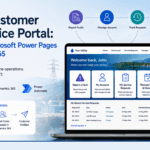
- Integrated Customer Portal & Chatbot: To boost customer engagement, Olix365 includes a self-service web portal for utility customers, integrated with an AI chatbot . Customers can use this portal to request new services or report issues, check the status of existing requests, and receive real-time updates (for example, “Your repair is scheduled for tomorrow at 10am”). The chatbot can handle common inquiries around the clock, reducing the load on call centers. By giving customers a direct window into the service process, Olix365 improves transparency and satisfaction.
- Inventory Management Tie-In: Olix365 doesn’t treat field service in isolation – it connects it with inventory and asset management. The system offers live inventory tracking with automated reordering alerts . When a work order is created, required parts can be reserved from inventory so that they’re ready for the technician. Field crews can even use mobile devices to scan parts’ barcodes, updating inventory as they use them. This integration means technicians arrive with the right materials, and stock levels across warehouses/trucks are always visible. It greatly increases first-visit resolution rates and avoids wasted trips due to missing parts.
- Preventive Maintenance & Asset Data: For utility asset upkeep, Olix365 supports preventive maintenance schedules. You can set up recurring maintenance work orders for each asset (transformers, pumps, meters, etc.), ensuring they get serviced at proper intervals . The system tracks task completion and can alert managers if any routine maintenance is overdue. By addressing issues proactively, utilities using Olix365 experience fewer unexpected breakdowns and extend their asset lifecycles. All maintenance history is logged, which is useful for compliance and analysis.
- Analytics and Continuous Improvement: Because Olix365 is an end-to-end ERP, it captures rich data on your operations – from response times and travel durations to inventory turnover and customer feedback. Utilities can leverage built-in reporting and dashboards (the Reporting Suite module) to monitor KPIs like average resolution time, technician utilization, or first-time fix rate. Identifying trends (e.g., a certain region has more repeat visits) becomes easier, enabling continuous improvement. Essentially, Olix365 provides the insights needed to refine your field service strategy over time.
What truly sets Olix365 apart is that it’s built for utilities. This means all the features above are designed with utility workflows and regulations in mind. The platform knows that a water utility might need to track boil-water advisory tasks, or an electric utility must log outage restoration times for regulatory reports. Olix365’s industry focus translates into a more seamless fit and faster value for utility companies. It offers the scalability to support both small municipal utilities and large multi-region operations, adapting as your needs grow . And because it’s cloud-based (built on Microsoft Dynamics 365), organizations get modern agility and security with minimal IT hassle.
By implementing Olix365, utilities can finally break free of the inefficiencies and silos that plague field operations. Instead, they gain a unified, intelligent system where scheduling, dispatch, inventory, customer service, and analytics all work in concert. The end results are compelling: faster response to outages and service requests, lower operating costs (thanks to better routing and resource use), and higher customer satisfaction. Field crews stay productive and safe, managers have real-time control, and executives get the data to make informed decisions. In short, Olix365 provides the total solution for optimizing service management and field operations in the utility sector – turning those best practices we discussed into everyday standard procedure. (For more details on specific features, you can explore the Olix365 Service Management module on our website.)
Conclusion
Ready to elevate your utility’s field operations? Embracing an integrated solution like Olix365 could be the key to unlocking new levels of efficiency and service excellence. In doing so, you’ll not only outrank competitors in performance, but also deliver the kind of reliable service that keeps customers satisfied and loyal.
FAQs
What is field service management in the utility industry?
It’s the process of scheduling, dispatching, tracking, and completing field jobs like maintenance or installations. Software tools are often used to coordinate tasks, routes, and crews in real time for faster response and fewer delays.
What are common challenges in utility field operations?
Key issues include scheduling conflicts, lack of real-time updates, long travel times, missing inventory, poor communication, and disconnected systems. These slow down repairs and increase costs.
How does scheduling and dispatch software improve utility services?
It automates job assignments, updates crews instantly, reduces delays, and improves customer satisfaction. Over time, it helps identify bottlenecks and plan more effectively.
What is mobile workforce management, and why is it important?
It refers to managing field teams through mobile devices. Crews receive real-time updates, access job details, log work digitally, and stay connected even in remote areas, ensuring faster and safer service delivery.
How does Olix365 support utility field service management?
Olix365 connects service, dispatch, inventory, finance, and analytics in one ERP platform. It simplifies workflows, improves visibility, and helps utilities manage field teams efficiently—without juggling multiple systems.